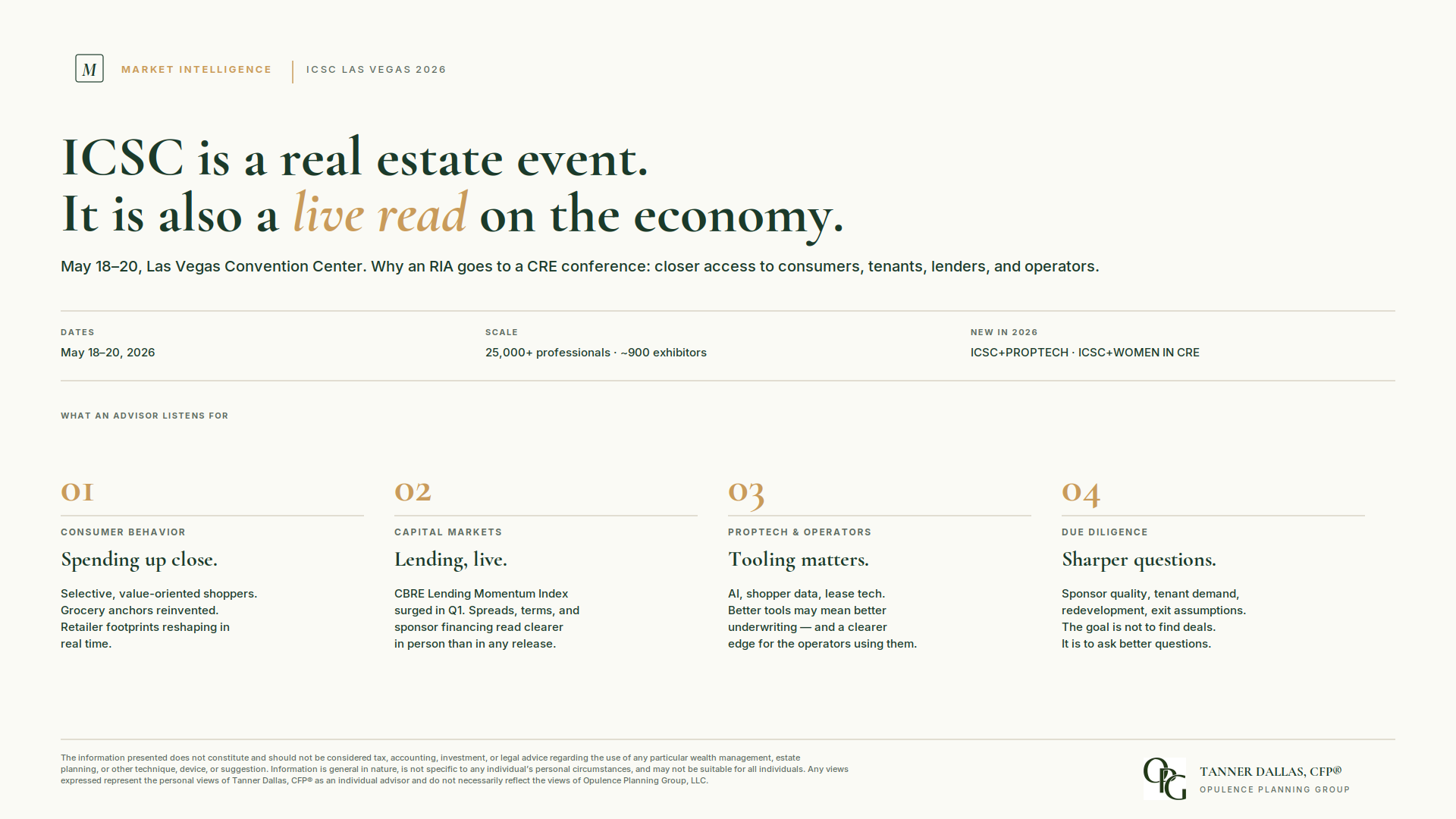
This week, I will attend ICSC Las Vegas at the Las Vegas Convention Center, where the program brings together commercial real-estate participants and related professionals [1]. I am not attending to sell a building or promote an offering. I am attending to listen to conversations among operators, lenders, retailers, and other market participants that may inform future diligence questions.
Most market intelligence reaches advisors as a finished product: a quarterly report, a research note, a chart that has already been smoothed and abstracted. ICSC is the opposite of that. It is the raw layer underneath the reports. Landlords describing which tenants are paying rent and which are negotiating, lenders describing which deals are closing and at what spreads, retailers describing what consumers are actually buying. The gap between reading the data and standing in front of the people producing it is the structural problem this trip is built around.
Here is what I am watching, why it matters for client portfolios, and the discipline I try to bring back from a conference like this.
The Real Economy, Up Close
Retail real estate sits at an unusually informative intersection. It touches consumer behavior, small-business formation, lending conditions, demographic migration, and private-market capital flows, all at once. A neighborhood center in a Sun Belt suburb is, in effect, a live data stream on the household that shops there, the operator that leases there, the bank that financed it, and the sponsor that owns it.
That data stream looks different in 2026 than it did even a year ago. The CBRE Lending Momentum Index, which tracks the pace of CBRE-originated commercial loan closings on a rolling 36-month basis, rose to 1.5 at the end of the first quarter of 2026, up from 1.2 in the fourth quarter of 2025 and just 0.3 a year earlier. That is the highest reading in five years [2]. Average loan sizes are up 14% year-over-year. Debt funds and mortgage REITs accounted for 53% of non-agency loan closings in the first quarter, up from 19% a year ago [2].
A change in who is lending, and at what size, is often a leading indicator of where capital believes it can earn its return.
That kind of shift does not show up in a client review meeting. It shows up in conversations with the people writing the loans.
Better Due Diligence Through Conversation
A meaningful portion of high-net-worth portfolios, particularly for accredited investors and qualified purchasers, has private real estate exposure of some kind. Open-ended core funds, non-traded REITs, interval funds, private syndications, joint ventures with operators. Diligence on those vehicles is rarely about the offering memorandum alone. It is about the operator, the market, the tenant roster, the basis, and the assumptions baked into the underwriting.
ICSC is built for those conversations. The conference brings together developers, retailers, brokers, lenders, and proptech vendors, and the format is designed for direct exchange [1]. The questions I want to ask are not pitch questions. They are diligence questions:
What are tenants signing? Retailers have been notably more selective in 2025 and into 2026, with decision cycles lengthening and concessions playing a larger role in deal structure [3]. Hearing that directly from a landlord is different from reading it in a research note.
Where is the rent growth coming from? CBRE's 2026 outlook expects grocery-anchored centers, neighborhood and strip centers, and high-income suburban corridors to outperform on both occupancy and rent growth, while older malls and power centers continue to lag [3]. The dispersion is the story, not the average.
Which operators are using technology, and which aren't? Shopper analytics, lease-management platforms, AI-driven site selection. The ICSC+PROPTECH program at this year's event is built around exactly these questions [1]. An operator using better tools is often, in our experience, an operator running a better business.
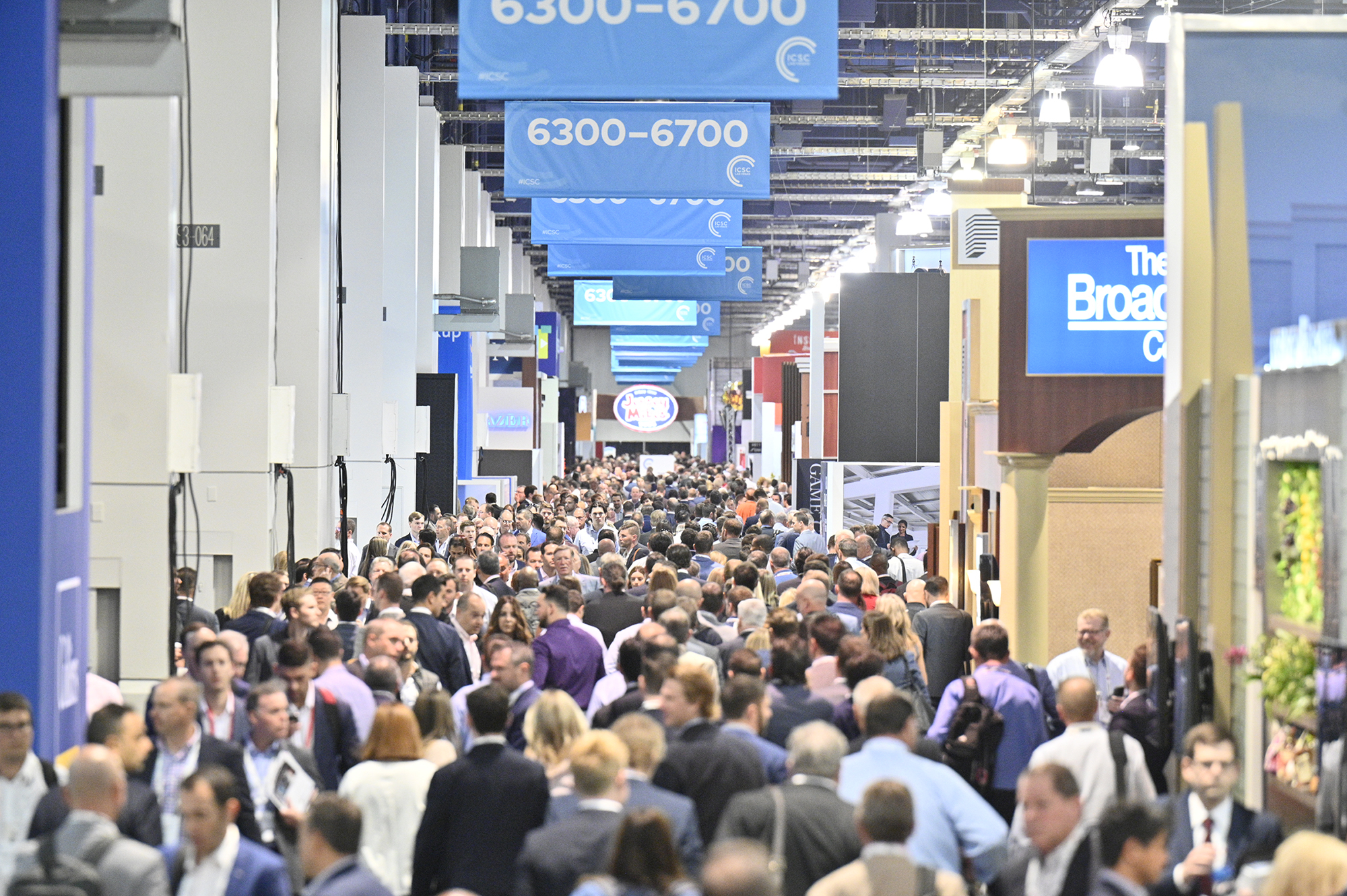
ICSC Las Vegas show floor.
The Consumer, Live
The most useful thing about ICSC, in my view, is that retail real estate forces you to confront what consumers are actually doing, not what surveys say they feel.
The data has been noisy. Real personal consumption expenditures rose 2.12% year-over-year in March 2026, down from 2.68% in February [4]. Total household debt reached $18.8 trillion in the fourth quarter of 2025, with credit card balances up 5.5% year-over-year [5]. Several Federal Reserve analyses have documented the so-called K-shaped consumer, with spending growth concentrated among higher-income households, with lower-income households pulling back more visibly [6].
What that looks like on the ground is value-seeking behavior, grocery and discount expansion, restraint on discretionary categories, and selectivity in dining and apparel. Cushman & Wakefield expected national retail vacancy to remain no higher than 5.8% by year-end 2025, with grocery-anchored and open-air centers outperforming that benchmark [7]. None of that is news to a retail operator. But it is the texture behind the spending charts, and texture is what most macro data lacks.
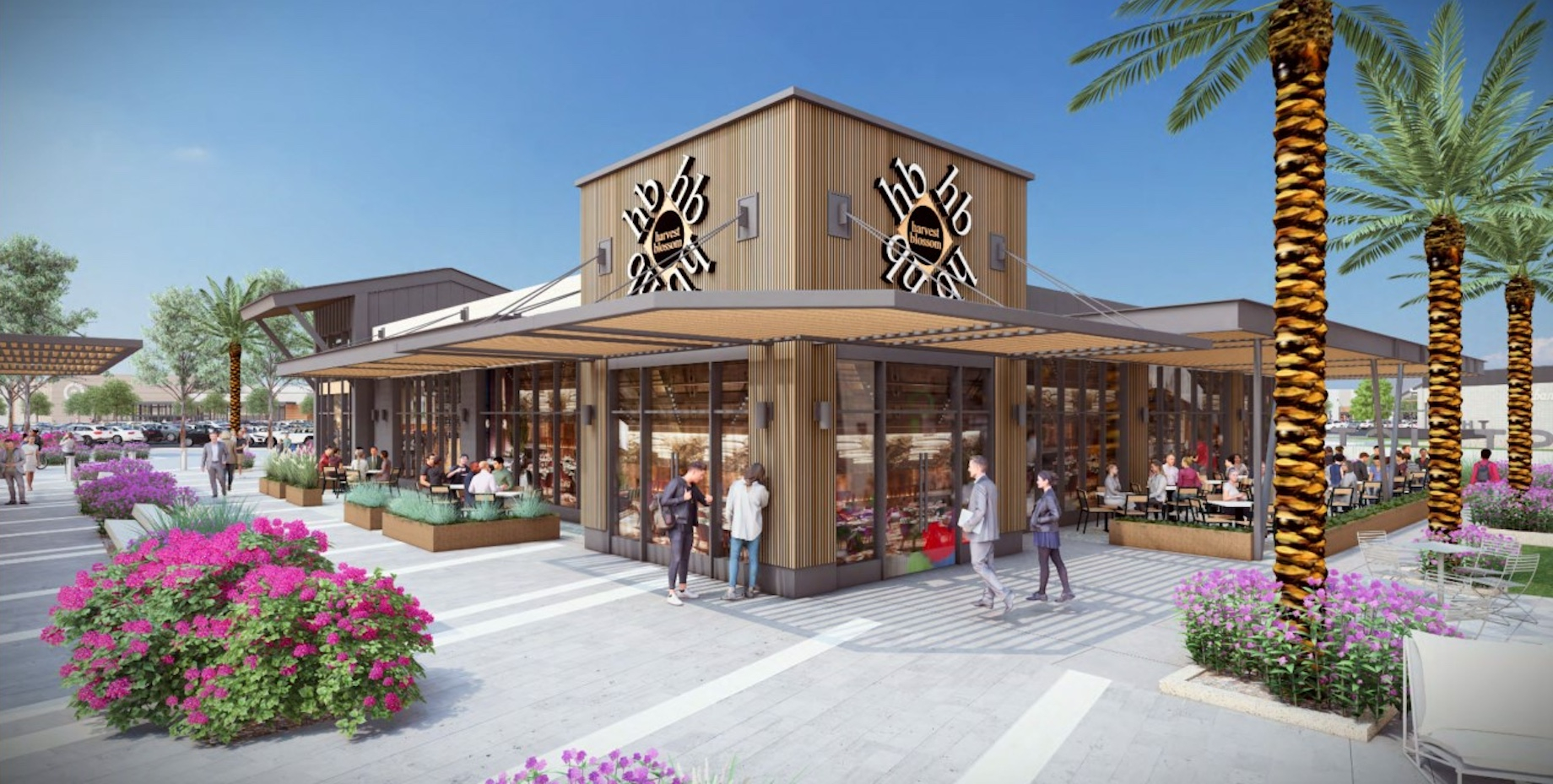
Grocery-anchored and open-air centers continue to outperform on occupancy and rent growth.
The Discipline of Going There
Conferences can be seductive. The risk in attending an event like ICSC as a private wealth advisor is the same risk that exists in any setting where capital is being raised: getting excited about the story and underweighting the risks.
The discipline I try to hold to is straightforward. Listen more than I talk. Take more notes than I think I need. Treat every sponsor pitch as the most optimistic version of the underwriting. Look for the operator who can articulate what could go wrong as clearly as what could go right. Ask the lender what is keeping them up at night, not what closed last quarter.
There are real risks in retail real estate going into the back half of 2026. Net absorption is forecast to average just 3.8 million square feet per quarter, well below the previous five-year average of 9.8 million [3]. Mall vacancies remain above 9% in many markets [8]. Tariff uncertainty has rattled retailer expansion plans. And the K-shaped consumer story is not a tailwind for everyone in the space. It is a tailwind for centers serving higher-income households and a headwind for those serving the rest.
A trip like this is most useful when it sharpens both sides of that ledger.
The Bottom Line
I am not going to ICSC to find deals. I am going to get closer to the data, the operators, the lenders, and the consumer signals that shape decisions our clients ultimately rely on. The job of a fiduciary is not to chase the most exciting story in the room. It is to ask better questions than the room expects, and to return with a sharper sense of where opportunity and risk actually sit.
The best version of this trip is one where I come back with fewer certainties and more good questions. That is usually what serving clients well looks like.
If you would like to talk through how private real estate or other private-market exposures fit into your overall plan, we welcome the conversation.
Tanner Dallas
Investment Adviser Representative
Opulence Planning Group
Sources & Further Reading
- ICSC, "ICSC LAS VEGAS 2026 Event Page." icsc.com
- CBRE (April 2026), "Commercial Real Estate Lending Activity Reaches Five Year High." cbre.com
- CBRE, "U.S. Real Estate Market Outlook 2026: Retail." cbre.com
- Bureau of Economic Analysis (April 30, 2026), "Personal Income and Outlays, March 2026." bea.gov
- Federal Reserve Bank of New York (February 2026), "Quarterly Report on Household Debt and Credit, Q4 2025." newyorkfed.org
- SEC Investment Adviser Public Disclosure, "Tanner Dallas." adviserinfo.sec.gov
- Federal Reserve Bank of Minneapolis (March 2026), "Have U.S. consumers gone 'K-shaped'? A review of the data." minneapolisfed.org
- Cushman & Wakefield, "U.S. Retail Marketbeat Q4 2025." cushmanwakefield.com
- Marcus & Millichap, "2026 U.S. Retail Investment Forecast." marcusmillichap.com
Important Disclosures
Opulence Planning Group ("OPG") is a DBA of Black Knight Wealth Management, a registered investment adviser. Securities offered through Charles Schwab & Co., Inc., Member FINRA/SIPC. Advisory services are offered only in jurisdictions where OPG and its representatives are properly registered or exempt from registration. This material is for informational and educational purposes only and should not be construed as personalized investment, tax, legal, or financial advice.
The information and opinions presented are general market commentary, subject to change at any time without notice, and may include forward-looking statements that involve known and unknown risks and uncertainties. While information in this content comes from sources OPG believes to be reliable, no guarantee of accuracy or completeness is provided. Actual outcomes may differ materially from those expressed or implied.
Any references to specific securities, investment strategies, tax provisions, or market indices are for illustrative purposes only and do not constitute a recommendation to buy, sell, or hold any security, nor do they imply suitability for any specific individual. This publication has been prepared without regard to the specific investment objectives, financial situation, or particular needs of any recipient. No mention of a particular security, index, or other instrument in this report constitutes a recommendation to buy, sell, or hold that or any other security, nor does it constitute an opinion on the suitability of any security or index.
Past performance does not guarantee or indicate future results. All investments involve risk, including the potential loss of principal. Index performance is shown for illustrative purposes only, does not reflect management fees or transaction costs, and one cannot invest directly in an index.
Tax laws are complex and subject to change. OPG does not provide tax or legal advice. Recipients should consult their own financial advisor, attorney, or tax professional before acting on any information provided. Strategies discussed may not be appropriate for every investor; suitability depends on individual circumstances.
Third-party research, data, and statistics cited herein are sourced from publicly available information believed to be reliable as of the date of publication. OPG makes no representation as to the continued accuracy of third-party data over time. Citations and source links are provided for transparency and do not represent an endorsement of those sources.
To check firm or individual backgrounds, visit FINRA's BrokerCheck at brokercheck.finra.org. BKWM Form CRS is available at reports.adviserinfo.sec.gov. © Opulence Planning Group. All rights reserved. For questions, contact info@opgadvisors.com.